
Native nodes
In mochabug Adapt there are multiple platform native nodes, Native nodes are nodes that cannot exist as applications. We have not limited the possibility for flow controls to native nodes, it is possible for you as an application developer to write your own flow controls. But the nodes mentioned in this section have to exist as native nodes.
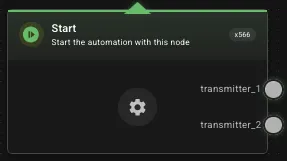
This is a mandatory node, a project is not a project without a start node. In the start node you can define if you have any mandatory and/or optional data that you need when calling the deployment as well as how many transmitters you want in your start node.
Output
Section titled “Output”
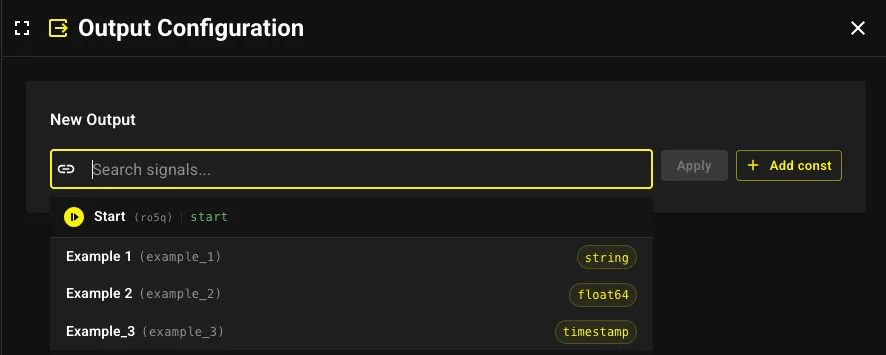
With the output node you explicitly set what data you want to send to the client. This is done by binding different signals that exists in your nodes upstream in your graph.
Delegate
Section titled “Delegate”
If you want a sessions to be run on another client than the session was started on you need to use Delegate. In the exchange you define how the session is move to the other client. All downstream nodes after a delegate node is then accessed on that client. If you use delegate in a fork, the session on the other client will only run for as long as the fork is active.
Barrier
Section titled “Barrier”
When forking a graph into multiple parallel tracks you sometimes need to collect them and define the behaviour before moving on to the next step in the graph. This is where you do this. Without a barrier, forks can’t be merged.
Exchange
Section titled “Exchange”For the native node called exchange please go to exchanges to understand why, when and how this is used.